ESP Prog Development Board About
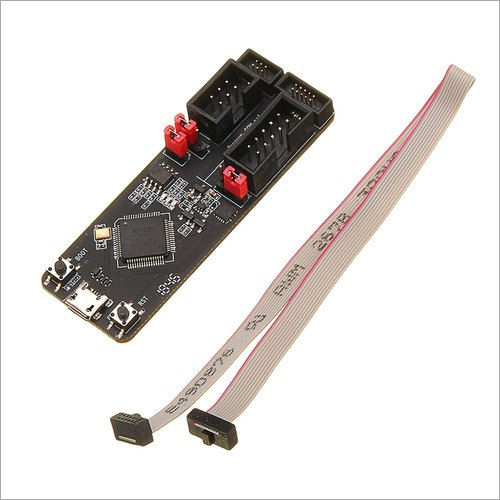
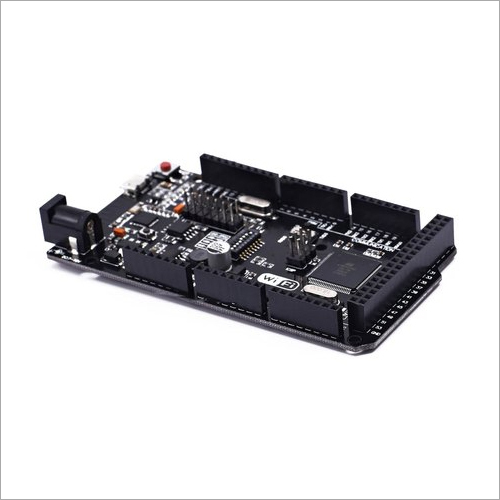
ESP Prog Development Board is a development and debugging tool with features like serial connectivity, online JTAG debugging, automatic firmware download, and more. It can communicate with ESP32 user boards via the JTAG and Program interfaces. The user interfaces on the user board should be connected in a fashion that matches the ESP-Prog board.
Advanced Connectivity for ESP8266 & ESP32This board supports both JTAG and UART programming interfaces, allowing seamless and flexible communication with supported ESP8266 and ESP32 series chips. The micro USB port ensures standardized power supply and easy integration with computers for smooth development and debugging processes.
Robust Performance & DurabilityEngineered with high-quality FR4 material and a flame resistance level of UL94-V0, the board withstands demanding environments. It operates efficiently between -20C and 70C. Features such as E-Test assurance and controlled impedance further enhance reliability in various technical setups.
Simple Firmware Upgrades & CompatibilityEffortlessly perform firmware upgrades through the micro USB interface. The board is universally compatible with Windows, MacOS, and Linux operating systems, making development hassle-free, regardless of your preferred platform.
FAQ's of ESP Prog Development Board:
Q: How do I use the ESP Prog Development Board to program ESP8266 and ESP32 chips?
A: Connect the target chip to the ESP Prog Board using either the JTAG or UART interface. Plug the board into your computer via the micro USB connector. Compatible development environments on Windows, MacOS, or Linux will recognize the device, enabling you to start programming or debugging immediately.
Q: What are the main benefits of using the ESP Prog Development Board for development projects?
A: The board offers reliable programming, real-time debugging with status LEDs, E-Test certified quality, wide temperature range, and cross-platform compatibility. Its robust construction and precise design make it ideal for professional, industrial, and hobbyist applications.
Q: Where is the ESP Prog Development Board typically used?
A: It is widely utilized in electronics laboratories, industrial automation setups, educational institutions, and prototyping workshops across India, serving developers, engineers, manufacturers, and suppliers involved with ESP8266 and ESP32 series projects.
Q: What is the process for upgrading firmware using this development board?
A: To upgrade firmware, connect the board via micro USB to your computer, select the appropriate target (ESP8266 or ESP32), and initiate the upgrade using the provided software interface. The programming status LED will indicate progress during the upgrade.
Q: When should I consider using a development board with both JTAG and UART interfaces?
A: You should consider this board when you require flexibility for in-depth debugging (JTAG) and standard firmware flashing (UART), especially on different ESP8266 and ESP32 series chips. This versatility expedites development, troubleshooting, and firmware validation.
Q: What does the E-Test certification signify for this product?
A: E-Test certification confirms the board has passed electrical testing procedures, ensuring circuit integrity and reliable performance for demanding programming and debugging tasks.
Q: How does the rigid FR4 base and UL94-V0 flame resistance benefit the user?
A: The rigid FR4 base ensures mechanical stability and durability, while UL94-V0 flame resistance provides enhanced safety during prolonged use, even in challenging environmental conditions.
 Send Inquiry



 Send Inquiry


 Send Inquiry


 English
 Spanish
 French
 German
 Italian
 Chinese (Simplified)
 Japanese
 Korean
 Arabic
 Portuguese