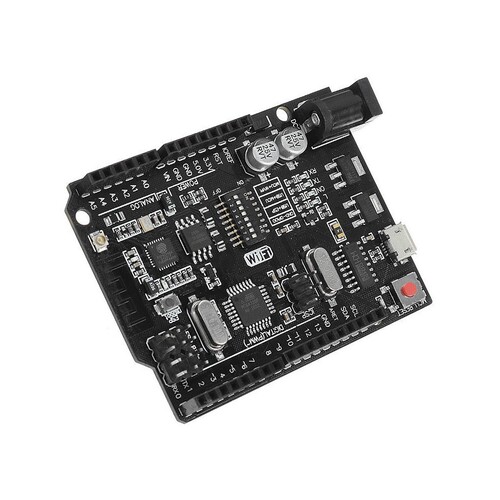
WiFi R3 AtMega328p NodeMSU ESP8266 32mb Memory USB-TTL CH340G About
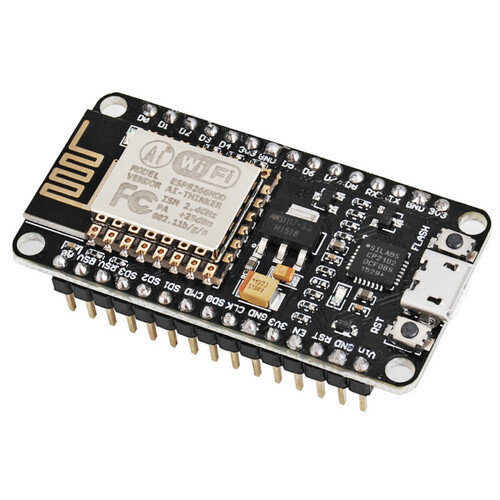
A convenient solution for developing new projects that require Wi-Fi. Through USB, you can update sketches and firmware for both ATmega328 and ESP8266. For this on board, there is a UART converter CH340G. The board has a DIP switch, which switches the modes of interaction of microcontrollers ATmegaa328 and esp8266. The operations of this board are very simple. The board has a DIP switch, to connect the modules. For example, USB and ATmega328, USB and ESP8266, and ATmega328 and ESP8266Powerful Integration for AutomationThis relay module leverages the AtMega328p and NodeMSU ESP8266 platforms to provide seamless control for automation applications. Its external power supply and multiple voltage options ensure reliable operation in real-world scenarios, making it ideal for both hobbyists and industry professionals seeking robust IoT solutions.
Flexible Connectivity and DesignWith USB-TTL CH340G, users experience fast and stable data transmission. The module's compact size and analog output capabilities allow it to fit into space-constrained environments, catering to modern designs that require efficiency and versatility. Its black color gives it a modern, universal appeal.
Broad Distribution Across TaiwanWhether you are a distributor, exporter, importer, manufacturer, supplier, trader, or wholesaler, this module is readily accessible in Taiwan. This ensures that businesses and engineers can get timely access to the module for their projects and operational requirements.
FAQ's of WiFi R3 AtMega328p NodeMSU ESP8266 32mb Memory USB-TTL CH340G:
Q: How is the WiFi R3 AtMega328p NodeMSU ESP8266 relay module powered?
A: The module is powered by an external power supply, supporting a supply voltage range of 6-12V DC and featuring a rated voltage of 5V for core operations. This setup ensures stable performance across different system requirements.
Q: What are the main benefits of using this relay module in automation or IoT projects?
A: This relay module offers robust performance, high memory (32mb), analog voltage output, and flexible connectivity through the USB-TTL CH340G interface. Its compact size and versatile operating voltage make it suitable for various automation and IoT applications.
Q: When should I use the analog voltage output feature of the module?
A: Use the analog voltage output when you need precise control or feedback from sensors or devices. It facilitates real-time monitoring and adjustments in applications such as environmental sensing or smart home automation.
Q: Where can I purchase the WiFi R3 AtMega328p NodeMSU ESP8266 module in Taiwan?
A: The module is available through a wide network of distributors, exporters, importers, manufacturers, suppliers, traders, and wholesalers across Taiwan, providing convenient access for both businesses and individuals.
Q: What is the process for integrating this relay module into an existing electronic setup?
A: To integrate the module, connect it to your system using the USB-TTL CH340G interface, supply it with the appropriate external voltage, and configure it with your control software. The analog output and relay functions are then ready for use in automated control applications.
Q: How does the compact size of 3.6um x 3.6um benefit installation?
A: Its exceptionally small dimensions enable installation in tight or space-limited environments, making it ideal for projects where size constraints are a concern, such as embedded IoT systems or portable devices.
 Send Inquiry




 Send Inquiry


 Send Inquiry


 English
 Spanish
 French
 German
 Italian
 Chinese (Simplified)
 Japanese
 Korean
 Arabic
 Portuguese