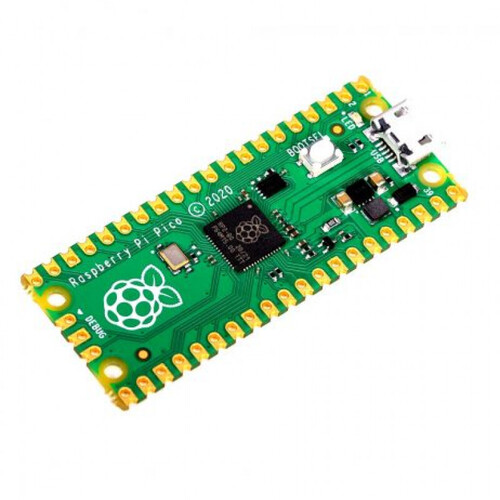
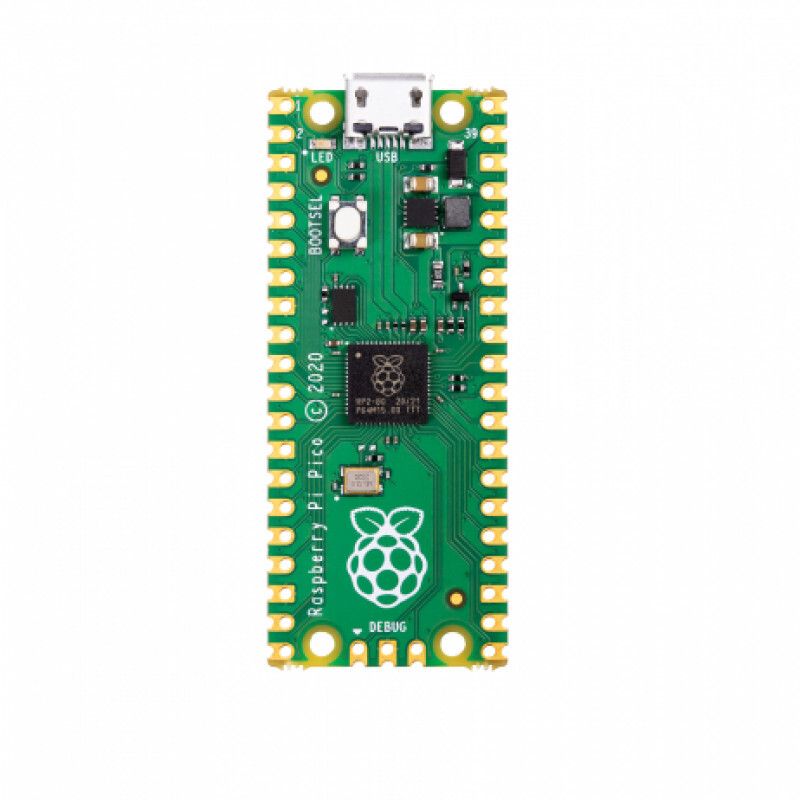
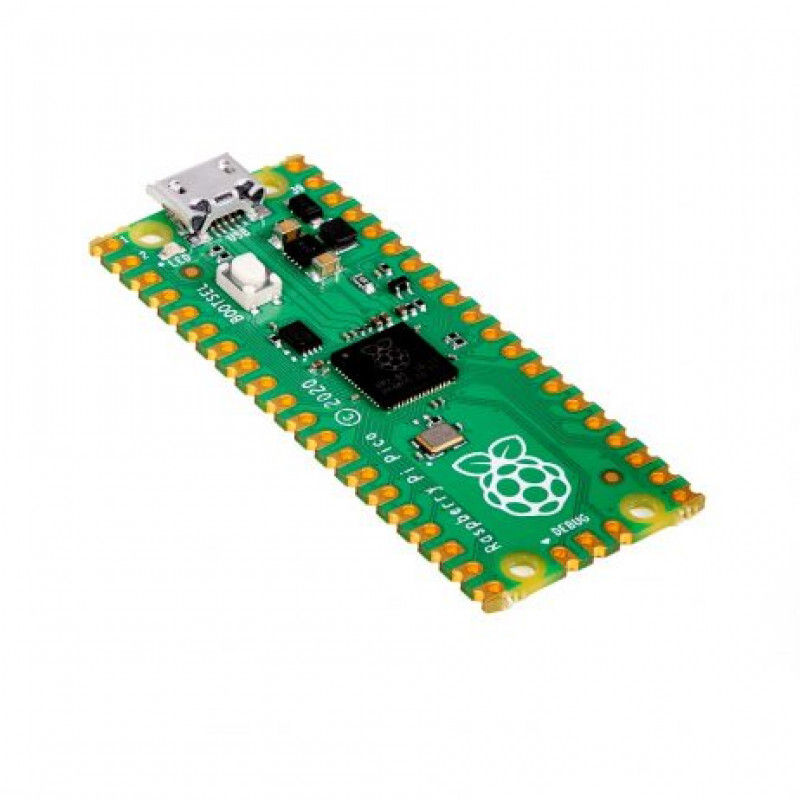
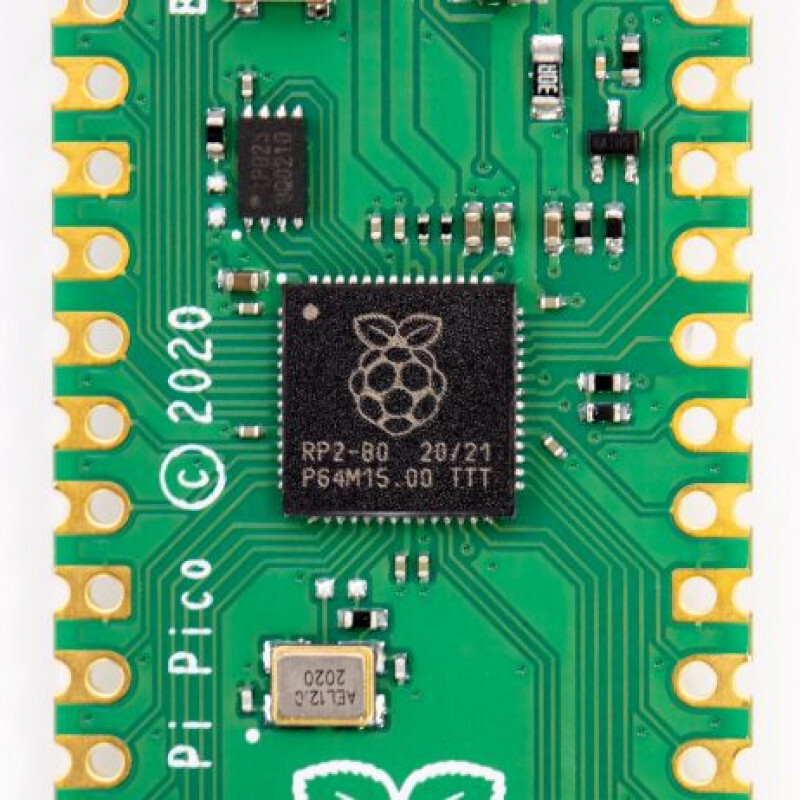
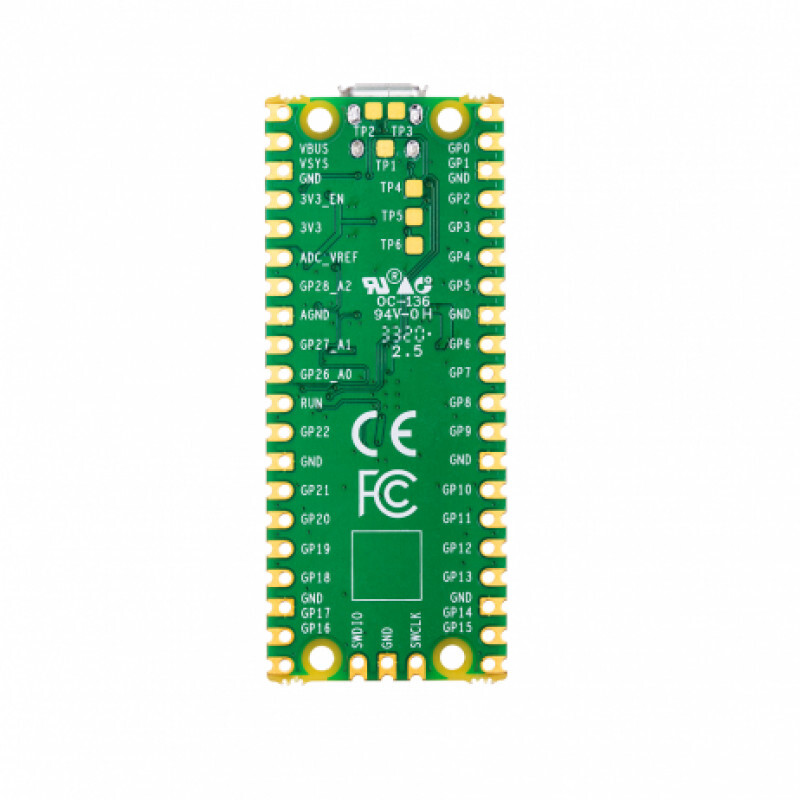
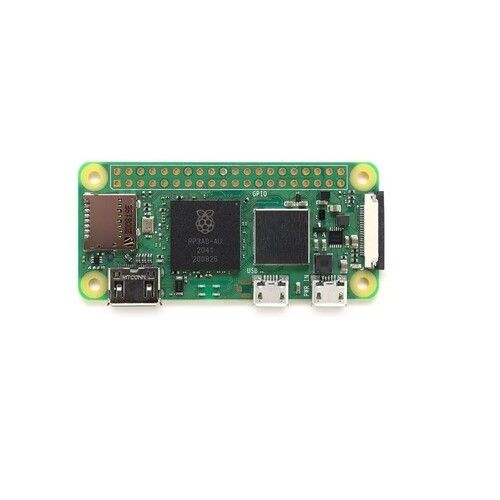
Raspberry Pi Pico Microcontroller Development Board About
Operating Voltage : 1.8 - 5.5V DC
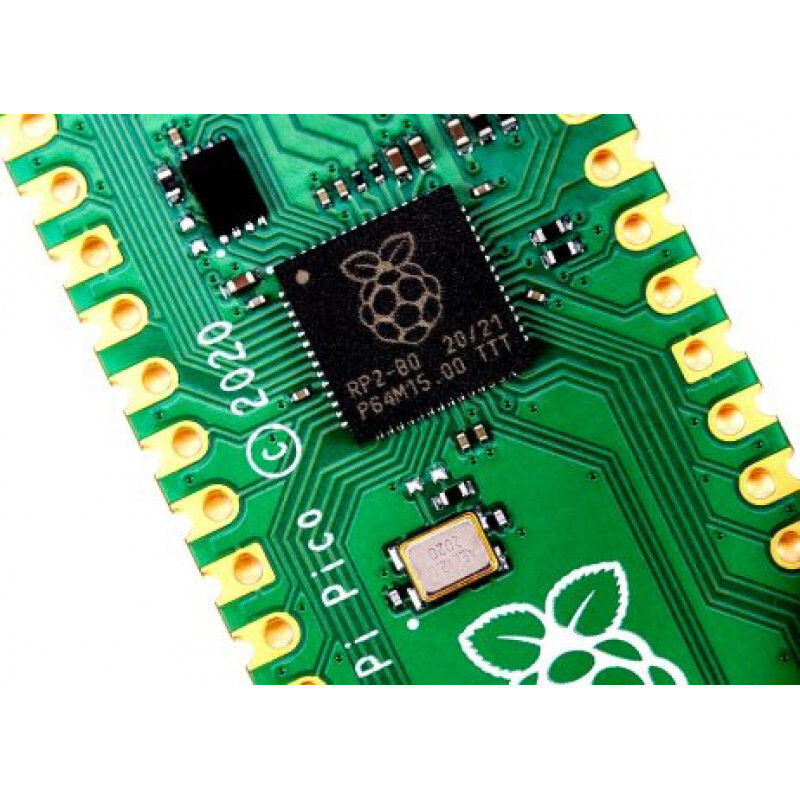
Processor : RP2040 (Dual-core Arm Cortex M0 Plus ) By Raspberry Pi
Interface : 2 x UART, 2 x I2C, 2 x SPI, up to 16 PWM channels
RAM : 264 KB
GPIO : 26 Pins
Clock Speed : 133 MHz
On-Board Ports : Micro-USB 5V/2.5A DC Power Input Port
Operating Temperature Range : -20 to 85 degree C
High-Performance Dual-Core ProcessingEquipped with the RP2040 processor, the Pico development board delivers robust computational capabilities suitable for a variety of industrial applications. Its dual-core Arm Cortex M0+ architecture enables efficient multitasking, supporting the development and testing of complex embedded systems.
Versatile Power Supply OptionsThe board accommodates a supply voltage from 5V to 12V DC, and has a rated operational voltage of 1.8V-5.5V, allowing for flexible integration into different power environments. Both AC and DC sources are supported, broadening its applicability across diverse project setups.
FAQ's of Raspberry Pi Pico Microcontroller Development Board:
Q: How can the Raspberry Pi Pico Development Board be powered?
A: You can power the Raspberry Pi Pico using either an AC or DC power source. It accepts a supply voltage between 5V and 12V DC, and its rated operational voltage ranges from 1.8V to 5.5V for stable performance.
Q: What is the primary interface provided for development?
A: The board features a serial interface, which enables straightforward connectivity for programming, debugging, and communicating with other devices during development.
Q: When should this microcontroller not be used?
A: This microcontroller should not be used in wet or humid environments, as it is not waterproof and is intended for dry, indoor industrial applications.
Q: Where is this development board manufactured and supplied from?
A: The Raspberry Pi Pico Microcontroller Development Board is manufactured, distributed, and exported from Taiwan by certified suppliers and exporters.
Q: What is the process for utilizing the board in industrial development?
A: To use the board for industrial applications, start by connecting it to a compatible power supply, interface it with your programming device via the serial port, and load your firmware or software as required for your project.
Q: How does the RP2040 processor benefit industrial projects?
A: The RP2040 dual-core Arm Cortex M0+ processor provides efficient, high-speed processing, enabling smooth multitasking and faster execution of industrial tasks.
Q: What warranty does the Raspberry Pi Pico come with?
A: This development board is backed by a 1-year warranty, covering manufacturing defects and ensuring reliable performance within the warranty period.
 Send Inquiry



 Send Inquiry


 Send Inquiry


 English
 Spanish
 French
 German
 Italian
 Chinese (Simplified)
 Japanese
 Korean
 Arabic
 Portuguese