Arduino Compatible Sensor Shield V5.0 Expansion Board About
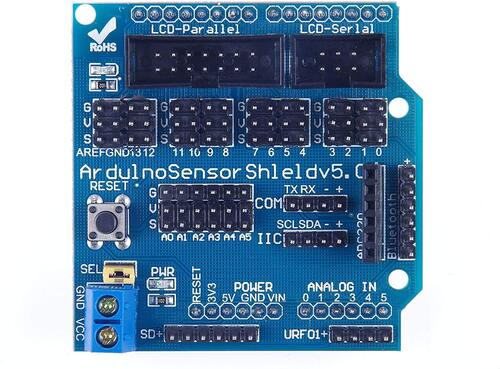
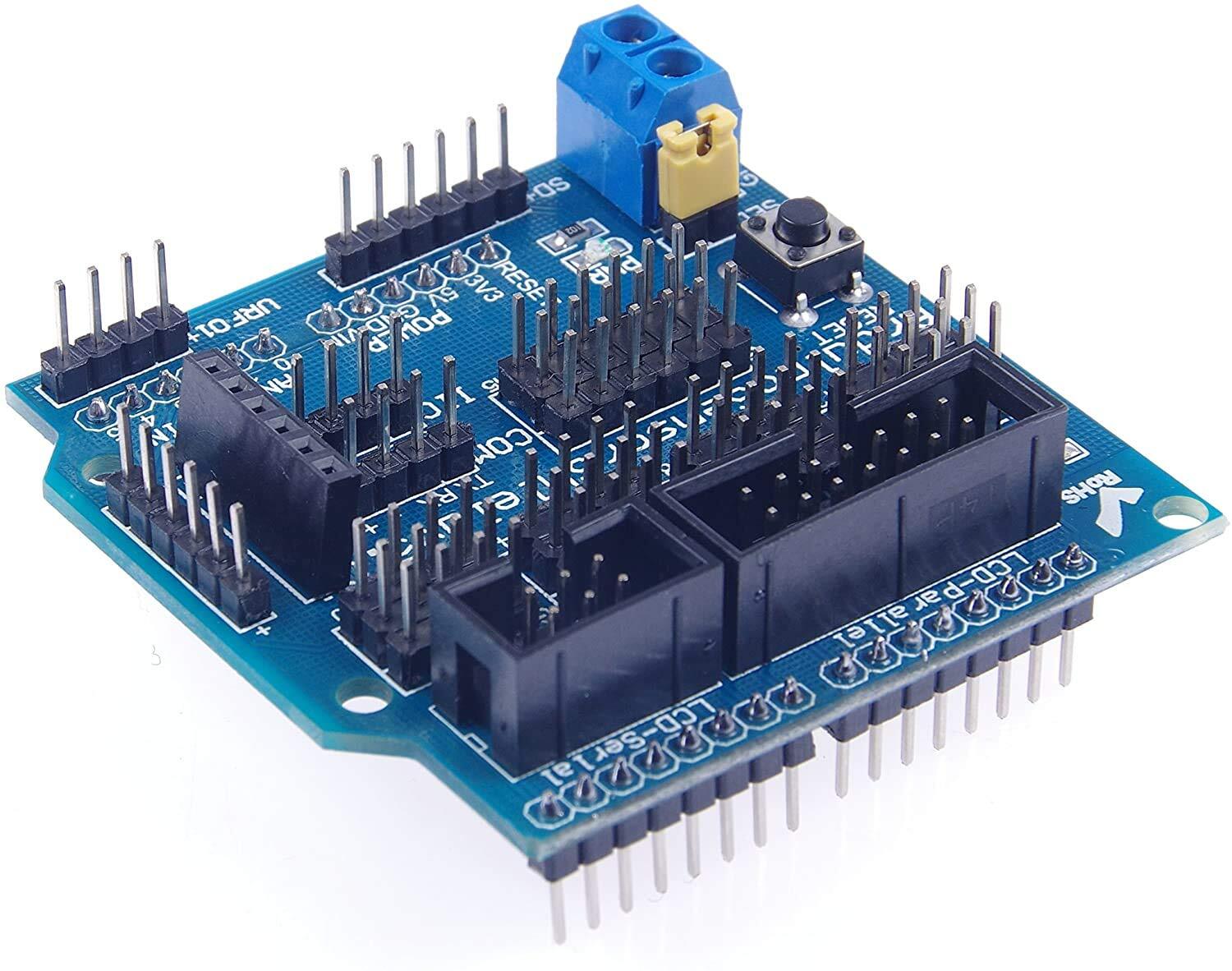
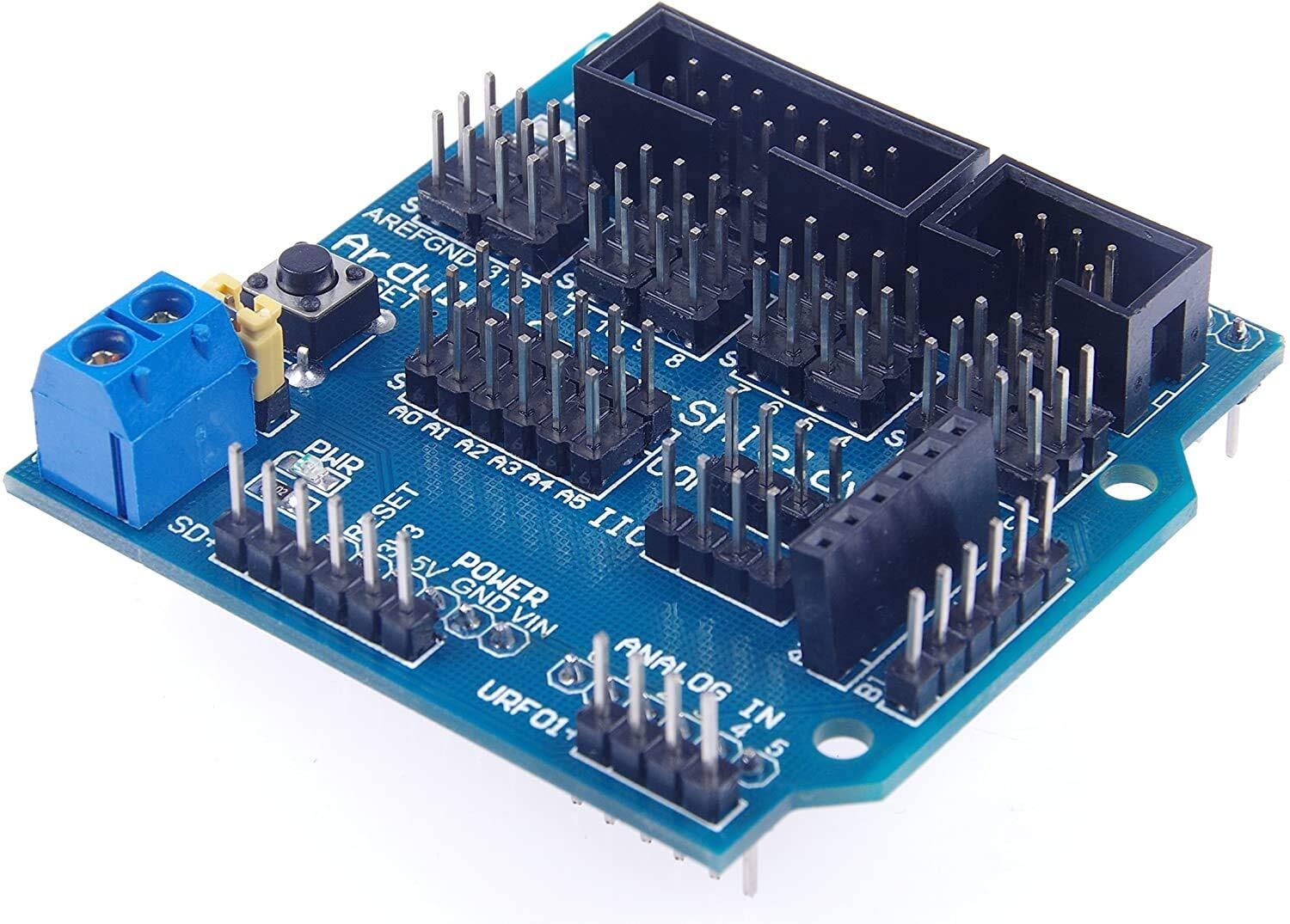
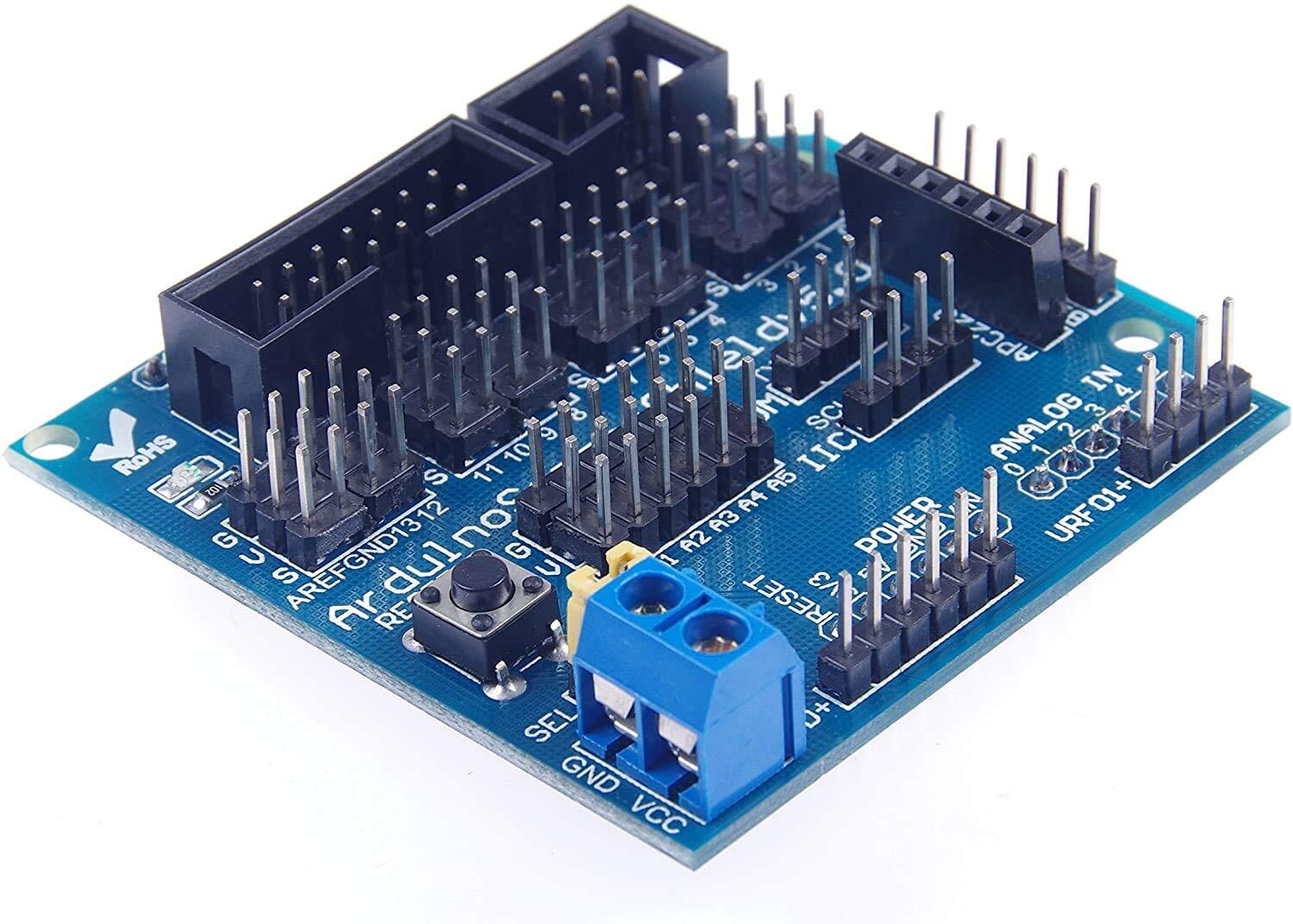
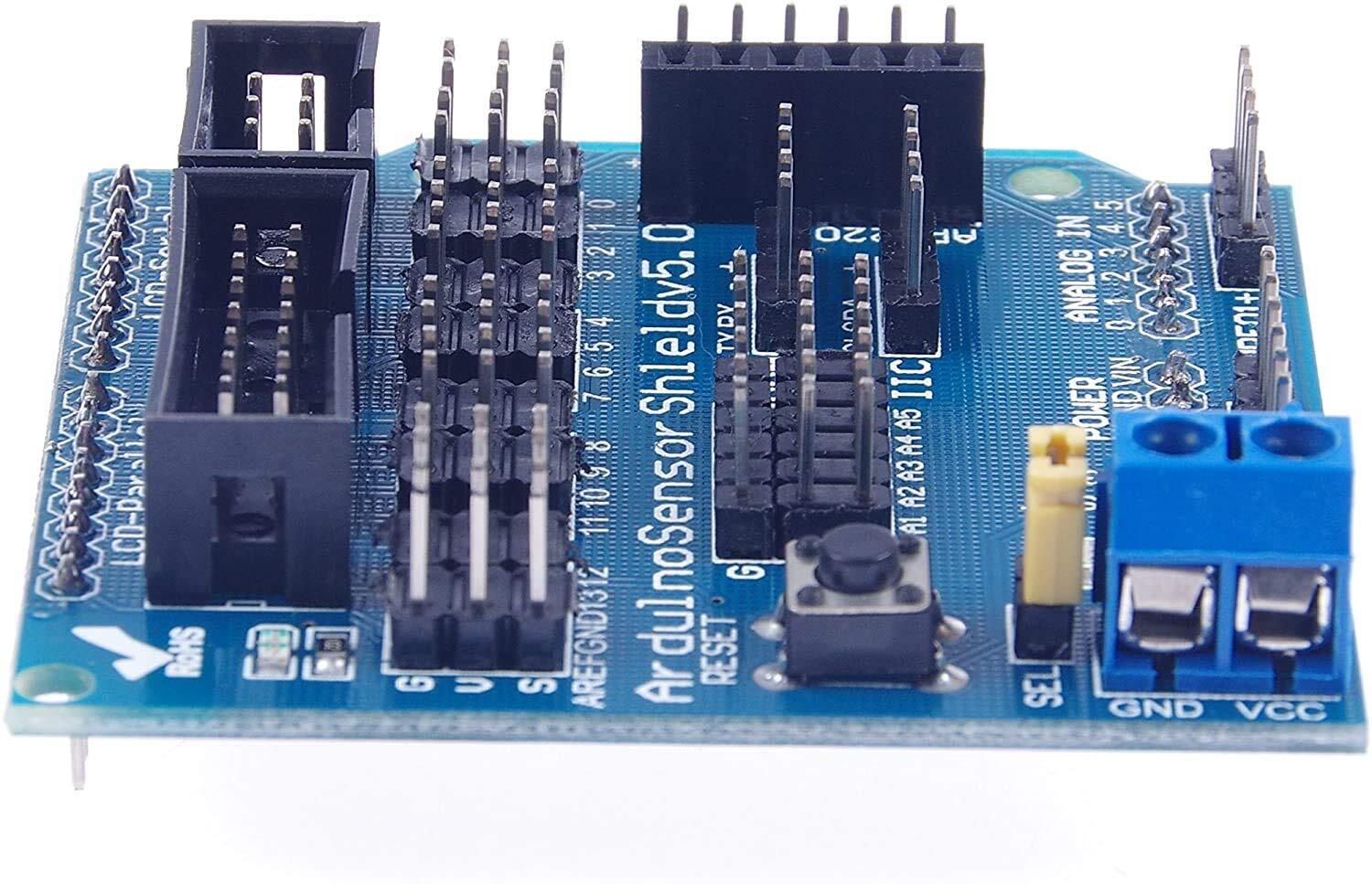
- It allows you to connect to various modules like sensors, servos, relays, buttons, potentiometers and so on.
- It has Ad hoc IIC interface, Bluetooth module communication interface, SD card module communication interface.
- APC220 radio frequency module communication interface, RB URF v1.1 ultrasonic sensor interface.
- 32 servo controller interface, 12864 LCD string of line and parallel interface.
- High quality and reliable product
Effortless Sensor IntegrationThis expansion board simplifies the process of connecting multiple sensors to your Arduino. Its dedicated slots and clearly labeled pins reduce wiring complexity, ensuring a smooth setup for both beginners and experienced developers. By utilizing the shield's 10x8-bit ADC channels, users can gather precise analog data quickly and reliably, streamlining overall project execution.
Advanced Communication CapabilitiesEquipped with an RS-485 interface, the Sensor Shield V5.0 supports robust long-distance data transmission, making it suitable for industrial and automation environments. This feature ensures reliable communication between devices-even in electrically noisy conditions-enhancing overall system performance and versatility.
International Reach from TaiwanDesigned and produced in Taiwan, the Sensor Shield V5.0 is distributed, exported, and supplied globally. Its standardized dimensions and power compatibility make it a preferred choice for manufacturers, importers, and traders worldwide, ensuring seamless integration into various applications and markets.
FAQ's of Arduino Compatible Sensor Shield V5.0 Expansion Board:
Q: How do I install the Arduino Compatible Sensor Shield V5.0 onto my Arduino board?
A: To install the Sensor Shield V5.0, simply align its pins with the corresponding headers on your Arduino and gently press it into place. Connect your sensors to the dedicated slots, then supply power using an external DC source within the recommended 6-24V range.
Q: What is the function of the RS-485 interface on this expansion board?
A: The RS-485 interface enables stable, long-distance serial communication between connected devices, particularly useful for industrial applications where noise immunity and extended reach are crucial.
Q: When should I use an external DC power supply for this shield?
A: You should use an external DC power supply (6-24V DC) whenever your sensor setup or the total load requires more power than what the Arduino's onboard regulator can provide, ensuring stable operation.
Q: Where can I purchase the Sensor Shield V5.0 if I am located outside Taiwan?
A: The Sensor Shield V5.0 is distributed, exported, and supplied internationally by various channels including online retailers, electronics distributors, and specialized importers-making it accessible almost anywhere.
Q: What benefits does the 10x8-bit ADC feature provide for sensor applications?
A: The integrated 10x8-bit ADC channels allow the connection and simultaneous reading of up to ten analog sensors, enabling efficient data acquisition and enhanced flexibility in complex projects.
Q: How is this sensor shield utilized in industrial or large-scale Arduino projects?
A: In industrial or large-scale projects, the Sensor Shield V5.0 facilitates the streamlined integration of multiple sensors and reliable communication between systems, minimizing wiring errors and enhancing scalability.
Q: What process should be followed to ensure the correct usage of the expansion board?
A: To use the shield correctly, mount it onto the Arduino board, verify the supply voltage, attach sensors to designated pins, and configure your Arduino code to interact with the connected sensors and RS-485 devices as needed.
 Send Inquiry



 Send Inquiry


 Send Inquiry


 English
 Spanish
 French
 German
 Italian
 Chinese (Simplified)
 Japanese
 Korean
 Arabic
 Portuguese