Call: +918448223338 08045478320
 Send Inquiry
Description :
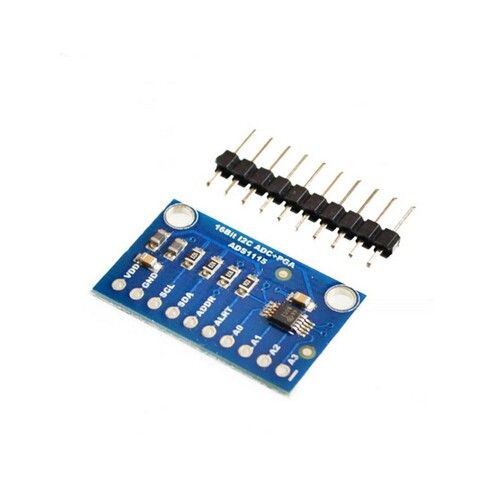
This is ADS1115 16-Bit ADC - 4 Channel with Programmable Gain Amplifier. For micro-controllers without an analog-to-digital converter or when you want a higher-precision ADC, the ADS1115 provides 16-bit precision at 860 samples - second over I2C. The chip can be configured as 4 single-end input channels or two differential channels. As a nice bonus, it even includes a programmable gain amplifier, up to x16, to help boost up smaller single -differential signals to the full range. We like this ADC because it can run from 2V to 5V power - logic, can measure a large range of signals and its super easy to use. It is a great general purpose 16-bit converter.
The chips fairly small so it comes on a breakout board with ferrites to keep the AVDD and AGND quiet. Interfacing is done via I2C. The address can be changed to one of four options so you can have up to 4 ADS1115s connect on a single 2-wire I2C bus for 16 single end inputs.
To get you start, we have example code for both the Raspberry Pi and Arduino Simply connect GND to ground, VDD to your logic power supply, and SCL-SDA to your microcontrollers I2C port and run the example code to start reading data.
Features :
WIDE SUPPLY RANGE: 2.0V to 5.5V
PROGRAMMABLE DATA RATE: 8SPS to 860SPS
It has an Internal low-drift voltage reference
Internal Oscillator.
Internal PGA.
I2C INTERFACE : Pin-Selectable Addresses.
Four single ends Or Two differential inputs.
Programmable Comparator.
This board-chip uses I2C 7-bit addresses between 0x48-0x4B, selectable with jumpers
LOW CURRENT CONSUMPTION: Continuous Mode: Only 150uA Single-Shot Mode: Auto Shut-Down

Price:
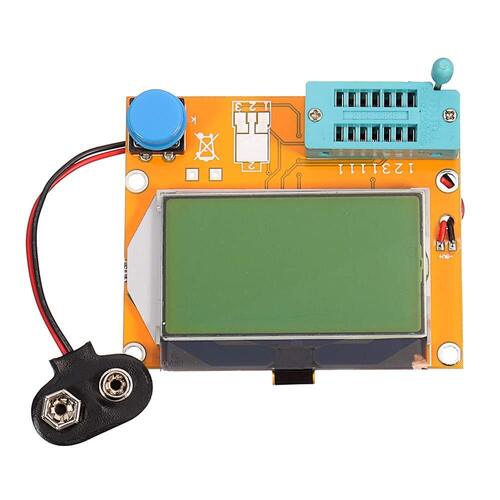
Price 1016 INR / Piece
Minimum Order Quantity : 1 Piece
Rated Voltage : 12V Volt (V)
Color : Black, Red, Yellow, Green, Blue
Supply Voltage : 1015V DC Volt (v)
Power Source : AC/DC
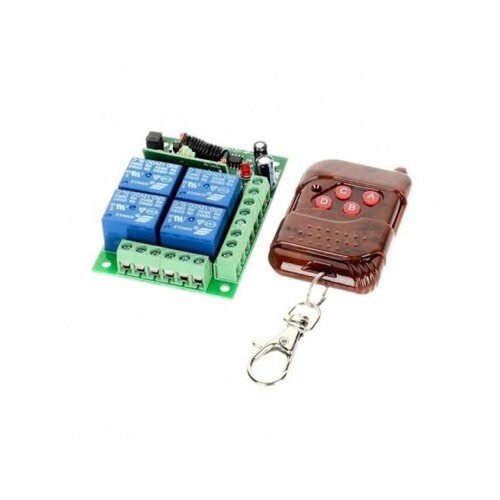
Price 705 INR / Piece
Minimum Order Quantity : 1 Piece
Rated Voltage : 12V DC Volt (V)
Color : Black with green
Supply Voltage : 1015V DC Volt (v)
Power Source : External DC Power Supply (not included)
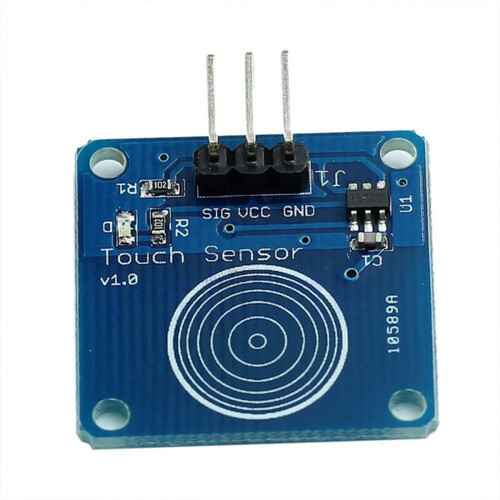
Price 24 INR / Piece
Minimum Order Quantity : 1 Piece
Rated Voltage : 5V Volt (V)
Color : Blue
Supply Voltage : 1015V DC Volt (v)
Power Source : Electricity
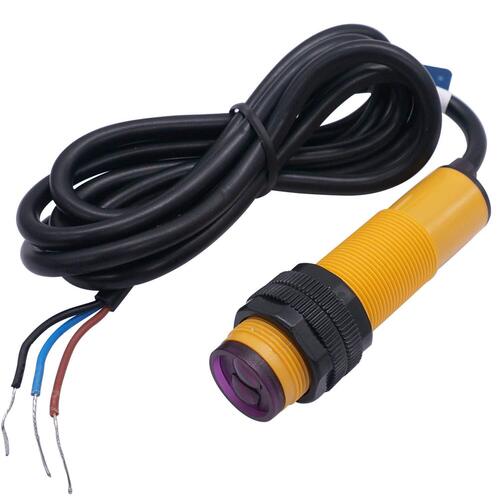
Price 165 INR / Piece
Minimum Order Quantity : 1 Piece
Rated Voltage : 12V DC Volt (V)
Color : Black with orange and yellow wires
Supply Voltage : 1030V AC or DC Volt (v)
GST : 07AAGCR7293D1Z6


 Send Inquiry


 Send Inquiry


 English
 Spanish
 French
 German
 Italian
 Chinese (Simplified)
 Japanese
 Korean
 Arabic
 Portuguese